
Dubai's Public Transport Expansion Under the 2040 Plan: Living Near a Metro Station
Dubai's 2040 Plan puts 55% of residents within 800m of transit. Here's what that transit-oriented shift really means for where you should buy.
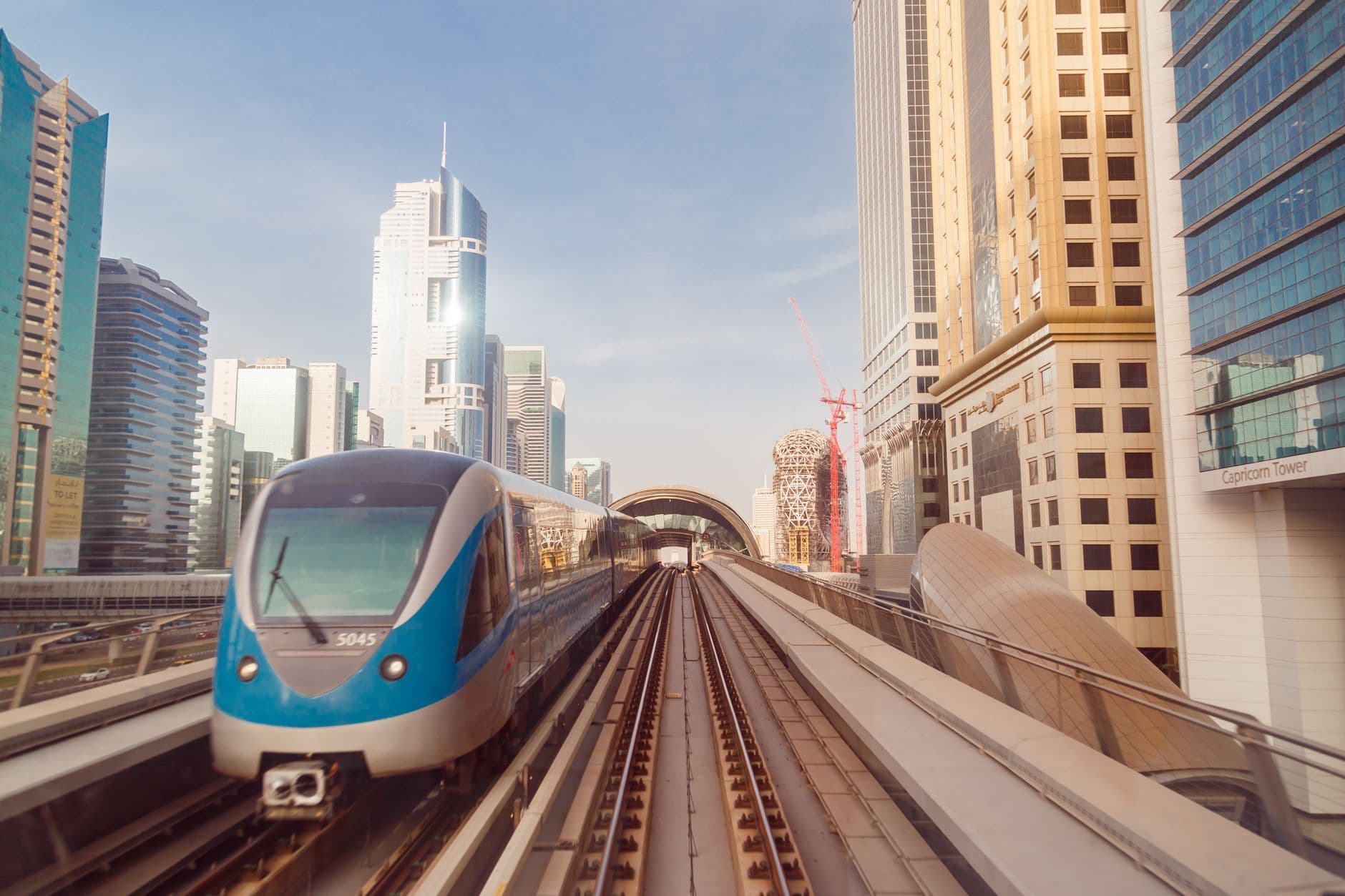

The target: 55% within 800 metres
One of the more concrete, measurable commitments in Dubai's 2040 Urban Master Plan is transport-focused: by 2040, 55% of Dubai's population will live within 800 metres of a main public transport station. That's roughly a ten-minute walk, the standard distance planners use to define genuinely "transit-accessible" housing, as opposed to housing that's merely served by transport somewhere in the general vicinity.
That's a meaningfully different city than the Dubai most buyers picture. Dubai's reputation, fairly or not, has long been built around car-dependent, wide-boulevard development. A plan that commits to putting the majority of residents within a short walk of transit represents a genuine structural shift in how the city is being built, not just an incremental transport upgrade.
Why proximity to transit is a real value driver
This isn't a soft or purely lifestyle-driven claim. Transit-oriented development, building housing, retail, and offices in walking distance of rail or metro stations, is one of the most consistently studied relationships in urban real estate economics globally. Property near reliable, high-frequency transit tends to command a premium over comparable property that isn't, and that premium tends to hold up over time better than amenity-driven premiums like a pool or gym, because it reflects a structural advantage rather than a design choice any building could copy.
The mechanism is straightforward: transit access widens the pool of people who can realistically live somewhere without owning a car, which increases both the buyer pool and the tenant pool for a given property. In a market like Dubai, with a large working population that includes both car owners and residents who prefer not to bear car ownership costs, that effect is likely to be pronounced as the network expands.
Where this connects to the five urban centres
The 55% transit-access target isn't disconnected from the rest of the plan, it's directly tied to the five designated urban centres (Deira & Bur Dubai, Downtown & Business Bay, Dubai Marina & JBR, the Expo 2020 District, and Dubai Silicon Oasis) where population growth is concentrated. Building dense population growth around transit hubs, rather than spreading it into car-dependent low-density areas, is a deliberate planning choice, and it's one of the clearer throughlines connecting the plan's population target (5.8 million residents by 2040), its urban-centre strategy, and its transport commitment.
Dubai's rail network itself continues to expand to support this. Beyond the existing Red and Green Metro lines, new lines are under construction and in planning to extend coverage further, including toward growth areas like Dubai South and the area around Al Maktoum International Airport, part of a broader rail expansion effort that includes both new Dubai Metro lines and the separate, UAE-wide Etihad Rail network. The specific routes and station locations will continue to be finalised over the coming years, but the direction, more of the city within walking distance of rail, is consistent with the 55% target.
What to actually check before buying on a transit-proximity thesis
"Near the metro" gets used loosely in property marketing, so it's worth being specific about what you're actually evaluating:
- Walking distance, not driving distance. A station five minutes by car can be a twenty-minute walk with no shaded, pedestrian-friendly route, which defeats the purpose entirely in Dubai's climate for much of the year.
- Existing versus planned stations. A project marketed as "near the future Blue Line" is a different proposition than one near an already-operating Red Line station, the former carries construction-timeline risk the latter doesn't.
- Whether the walking route is actually built out. Pedestrian infrastructure, covered walkways, crossings, matters as much as raw distance in a hot climate market like Dubai's.
The takeaway
Dubai's commitment to put a majority of residents within an 800-metre walk of transit by 2040 is a genuine structural change with real, well-documented implications for property value, not just a convenience upgrade. It's a strong reason to weight transit access, real, existing transit access, not just proximity to a line on a future map, heavily when comparing similar projects within the same urban centre. For the full picture of how the plan's growth areas fit together, see the Dubai 2040 Plan overview.
You don't have to do this alone
Buying, selling, or investing in Dubai property? Get honest, data-backed guidance from Dubai Land Department records, and book a meeting with a gold-rated agent only when you want one.
Get free adviceMore from 2040 Vision
Curious how a specific developer measures up?
Browse developers →