
Dubai 2040 Plan: Nature Reserves, Beaches, and Lifestyle-Led Real Estate Growth
60% of Dubai's land as nature reserve, beaches up 400%, how the 2040 Plan's environmental commitments are reshaping lifestyle-led demand.
A bigger environmental commitment than most growing cities attempt
Dubai's 2040 Urban Master Plan is usually discussed in terms of population growth and new urban centres, but some of its most striking commitments are environmental. The plan designates 60% of Dubai's total land area as nature reserves and natural areas, commits to increasing public beach length by 400%, and grows space allocated to hospitality and tourism activities by 134%. Together with the plan's separate commitment to roughly double green and recreational space citywide, these figures describe an emirate positioning itself around lifestyle and access to nature at a scale that's unusual for a rapidly urbanising city.
For real estate buyers, this matters beyond aesthetics. Lifestyle-led amenities, genuine coastal access, protected natural land, expanded tourism and hospitality infrastructure, are increasingly what differentiates cities competing for long-term residents and investors, not just visitors. Dubai's 2040 commitments are a direct, government-backed bet on that competition.
60% nature reserves: a land-use commitment, not a marketing phrase
Designating 60% of total land area as nature reserve and natural land is a substantial structural commitment, it directly caps how much of the emirate can ever be converted to dense urban development under the current plan, which is precisely why growth is being concentrated into the plan's five named urban centres (Deira & Bur Dubai, Downtown & Business Bay, Dubai Marina & JBR, the Expo 2020 District, and Dubai Silicon Oasis) rather than spread across the emirate's full land area.
For buyers, that connection is worth understanding: the nature reserve commitment and the urban-centre concentration strategy are two sides of the same plan. Preserving 60% of the land as natural area is only compatible with accommodating population growth to 5.8 million residents by 2040 if that growth is genuinely concentrated rather than sprawling, which is exactly what the plan's urban-centre structure is designed to enforce.
+400% beach length: expanding a defining Dubai amenity
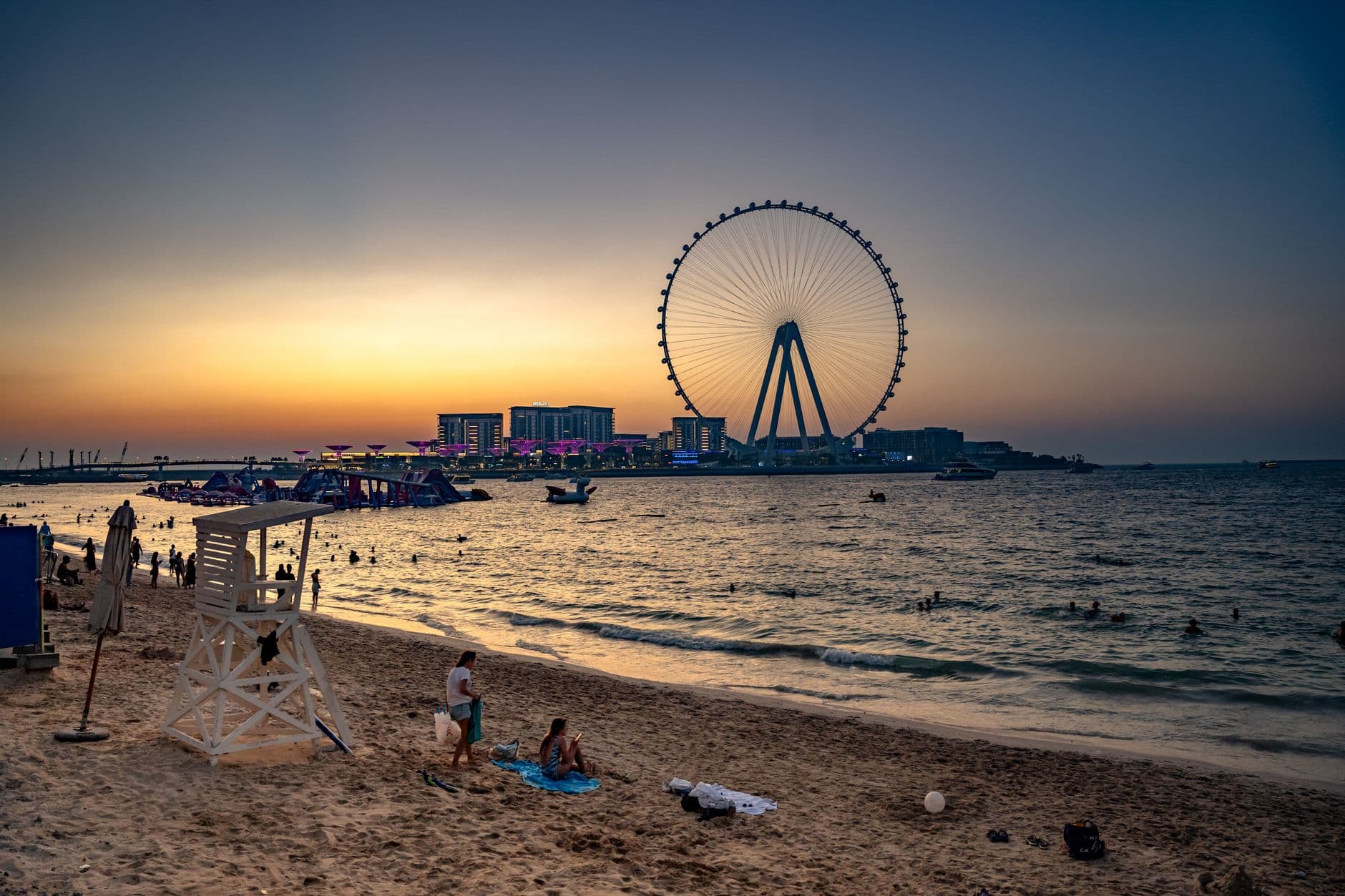
Beach access has long been one of Dubai's core lifestyle draws, and a fourfold increase in public beach length is a significant expansion of that specific amenity. This connects directly to the plan's tourism and hospitality space growing by 134%, more coastline paired with more hospitality infrastructure points toward continued investment in Dubai's identity as a global leisure and lifestyle destination, not just a business and logistics hub.
For property specifically, coastal and beach-adjacent locations have historically commanded some of the strongest premiums in Dubai's market, and a substantial expansion of public beach length has two distinct effects worth separating: it may create genuinely new beachfront-adjacent development opportunities in areas that don't currently have coastal access, while also potentially easing some of the scarcity premium currently attached to Dubai's existing, limited beachfront stock. Which effect dominates in a given area will depend heavily on exactly where new beach length is developed, a detail that will become clearer as specific projects are announced, rather than something the headline figure alone can tell you.
How this differs from the green space story
It's worth distinguishing this from the plan's green and recreational space commitment (a separate 105% increase), which is more about urban parks and everyday livability within the dense urban centres. The nature reserve and beach commitments covered here are a different, complementary layer, large-scale environmental preservation and coastal/tourism infrastructure at an emirate-wide scale, rather than neighbourhood-level park access. Together, the two paint a consistent picture: Dubai is pursuing dense, transit-connected urban centres while simultaneously committing an unusually large share of its remaining land to preservation and lifestyle infrastructure, rather than treating those as competing priorities.
What this means for lifestyle-led buyers
Buyers prioritising quality of life, proximity to nature, beach access, a broader tourism and hospitality ecosystem, have a clearer government-backed thesis to work from than in many comparable global markets, where this kind of environmental commitment tends to be aspirational rather than backed by a specific land-use plan and legal framework (the 2040 Plan is underpinned by a National Housing Program and Urban Planning Law). That said, as with every other piece of the plan, the twenty-year horizon means much of this build-out, the full expansion of protected nature reserves, the complete beach-length increase, will land gradually rather than all at once.
Before treating "near a planned nature reserve" or "near expanded beach access" as a reason to pay a premium for a specific project, it's worth checking whether the relevant natural area or beach access is already established or still years from completion, in the same way that's true of the plan's green space and transit commitments.
The takeaway
Dubai's 2040 Plan pairs dense, concentrated urban growth with an unusually large commitment to nature reserves, expanded beach access, and hospitality infrastructure, a deliberate lifestyle positioning, not an afterthought to the plan's growth targets. For buyers prioritising quality of life alongside investment fundamentals, that combination is a genuine differentiator worth weighing. For the full set of verified figures behind these commitments, see the Dubai 2040 Plan overview.
You don't have to do this alone
Buying, selling, or investing in Dubai property? Get honest, data-backed guidance from Dubai Land Department records, and book a meeting with a gold-rated agent only when you want one.
Get free adviceMore from 2040 Vision
Curious how a specific developer measures up?
Browse developers →