
Dubai's New Al Maktoum International Airport and Its Impact on Nearby Real Estate
Al Maktoum International's AED 128 billion expansion is reshaping Dubai South. Here's what's confirmed and what it means for nearby property.

A genuinely different scale of project
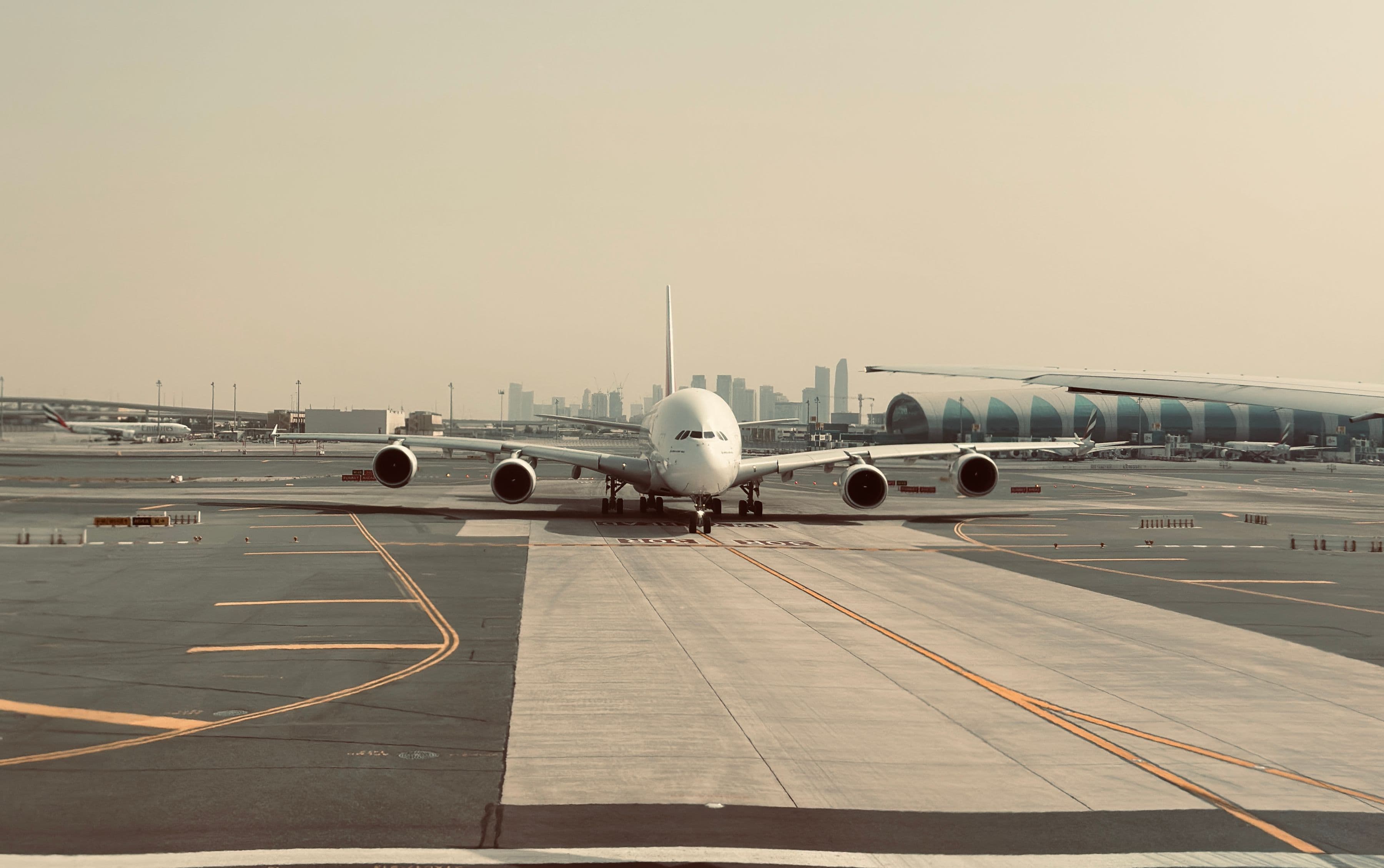
Al Maktoum International Airport, located within Dubai World Central in the emirate's south, is undergoing an expansion large enough that it's being described as the eventual construction of the world's largest airport. The project carries a reported price tag of around AED 128 billion (roughly $35 billion), with the completed airport designed to handle more than 260 million passengers annually across five parallel runways, two passenger terminals, seven concourses, and 430 aircraft stands, a scale nearly three times Dubai International Airport's current capacity, despite DXB already ranking among the world's busiest airports.
This isn't a speculative announcement. Contracts worth billions of dirhams are actively being executed, with more than 10 million work hours logged on the project, and the first major phase, targeting capacity for roughly 150 million passengers a year, is on track for operations beginning in 2032. For real estate in the surrounding area, that's a long enough runway that it's worth separating what's genuinely confirmed and already moving markets from what's still years away.
What's already happening in Dubai South
The real estate impact isn't purely theoretical or future-dated, it's already visible in transaction data. Dubai South, the district surrounding the airport, recorded AED 16.1 billion in property sales in 2024, and more than AED 15 billion in just the first five months of 2025, according to reporting from regional outlets including Khaleej Times. Rents in the area rose roughly 20% over 2025, and industry forecasts point to a further 15–20% increase in property prices in the near term as the airport expansion continues.
That pace of growth reflects genuine investor and end-user response to a large, government-backed infrastructure commitment landing in a specific, identifiable district, not just marketing narrative. Real estate brokerages in the area have also reported strong month-on-month growth in buyer and tenant inquiries as awareness of the expansion timeline has spread.
Why this matters beyond the immediate airport footprint
Major airport expansions tend to reshape real estate demand well beyond their own perimeter, for reasons that are fairly consistent across global markets: they anchor employment (aviation, logistics, hospitality, and the broader supply chain around a hub airport), they justify new transport infrastructure that benefits the wider surrounding area, and they create a long-term demand floor for residential and commercial property serving the workforce the airport itself will require.
That employment and logistics dimension matters for Dubai's economy more broadly, the aviation sector is projected to contribute more than 30% of Dubai's GDP by 2030, underscoring how central this expansion is to the emirate's economic strategy, not just its property market.
Connectivity is being built out, not just planned in the abstract
Improving connectivity between Dubai South and the rest of the emirate is a genuine, active part of the surrounding infrastructure picture. Dubai's Metro network is expanding southward as part of broader network growth, with rail connectivity toward Expo City Dubai and the Dubai South area under construction as part of that expansion. Separately, the UAE's national Etihad Rail network has designated Al Maktoum International as a stop on its freight and passenger corridor, which would connect Dubai South to other emirates including Abu Dhabi and Sharjah by rail. Exact station locations, sequencing, and opening dates for some of these connections are still being finalised, so it's worth treating specific route claims from any single source with some caution, but the direction of investment, toward substantially better rail connectivity for the area, is well corroborated across multiple infrastructure announcements.
What buyers should actually weigh
The 2032 timeline is real but distant. Phase 1 operations are targeted for 2032, six years from now as of this writing. Property bought today near the airport is a genuinely long-horizon bet on infrastructure that's under active construction but not yet operational, similar in structure to buying early into one of the Dubai 2040 Plan's designated urban growth centres.
Near-term price growth is already priced into some of the area. With sales volumes, rents, and forecast prices already moving as of 2025, buyers entering now aren't getting in ahead of all market awareness, a meaningful re-rating has already begun in response to construction progress and confirmed contracts, not just the original announcement.
Developer diligence still applies in full. Dubai South's growth has drawn a wide range of developers into the area, and the same fundamentals apply here as anywhere else: a strong location thesis doesn't protect against a developer that fails to deliver on time or to specification. Comparing track records across Dubai property developers active in the Dubai South area remains essential diligence, regardless of how compelling the airport-driven growth story is.
The bottom line
Al Maktoum International Airport's expansion is one of the largest, most concretely funded infrastructure commitments currently reshaping any single district of Dubai real estate. The transaction data from 2024 and 2025 shows the market is already responding, well ahead of the airport's 2032 first-phase opening. That makes Dubai South one of the clearer infrastructure-driven growth stories in the emirate right now, but, as with any long-horizon bet tied to a project years from completion, it rewards patience and real developer diligence over chasing the fastest possible entry.
You don't have to do this alone
Buying, selling, or investing in Dubai property? Get honest, data-backed guidance from Dubai Land Department records, and book a meeting with a gold-rated agent only when you want one.
Get free adviceMore from Market Watch
Curious how a specific developer measures up?
Browse developers →